



At the Njord field in the Norwegian Sea, Saipem’s Hydrone-R Underwater Intervention Drone (UID) has rewritten the record books for subsea residency. On its first deployment, Hydrone-R – designed, supplied and operated by Saipem – worked continuously for 165 days at 330 metres water depth without surface assistance. On the second deployment, the same drone pushed the world record to 240 days of residency.
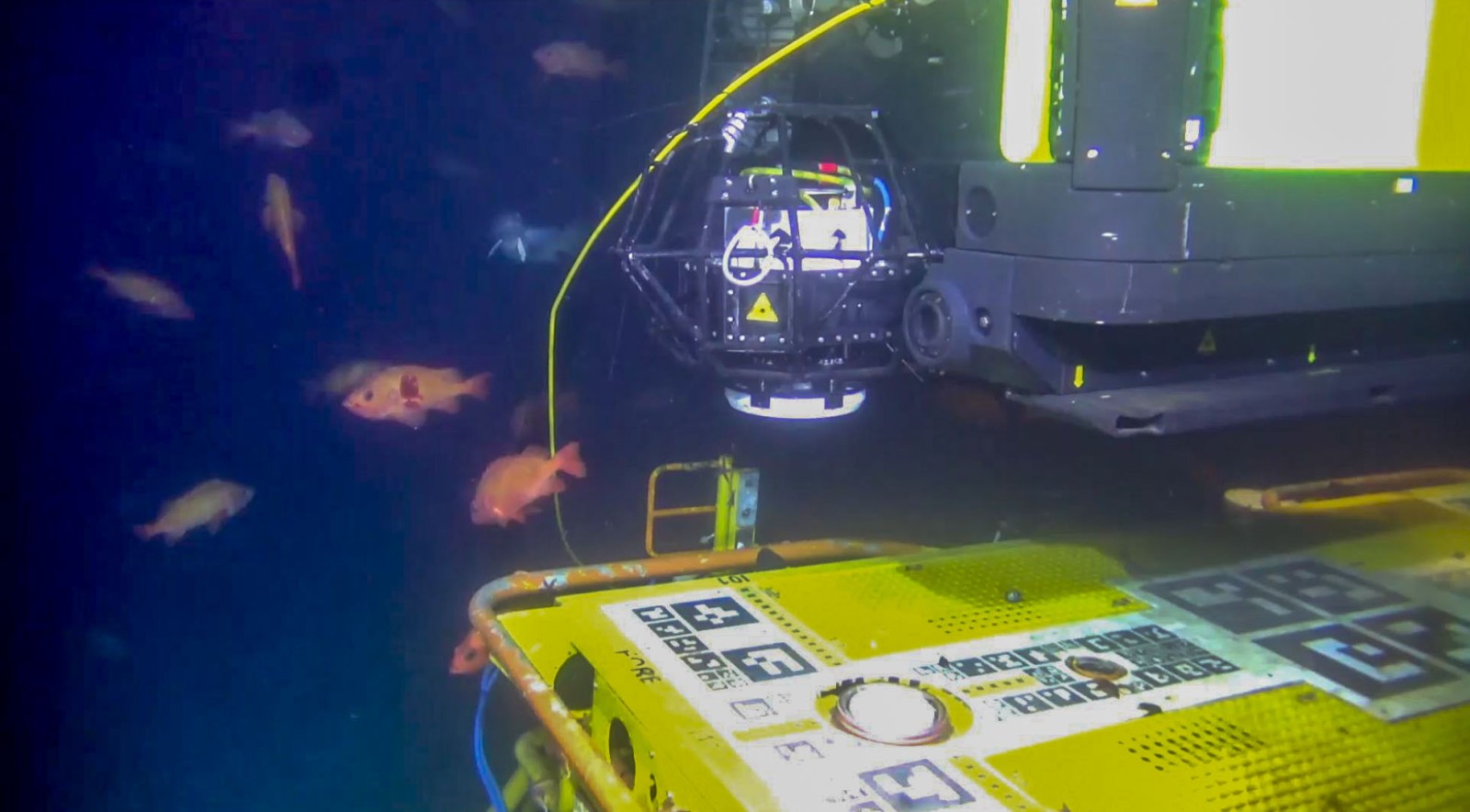
Throughout these missions, the drone lived on a Blue Logic Subsea Docking Station (SDS) equipped with Unplugged’s wireless inductive charging and communication system. The station allows the drone to dock, recharge and offload mission data on the seabed instead of returning to the surface.
Courtesy of Equinor & Saipem
When Equinor, Saipem and Blue Logic set out to prove that resident subsea drones could replace large parts of traditional IMR vessel campaigns, they needed one thing above all: a subsea “home base” that could deliver reliable power and data day after day, month after month.
That is exactly what Blue Logic and Unplugged deliver together.
A new way of working subsea
The technology behind the record
The Njord SDS is built around our open, standardised inductive interface:
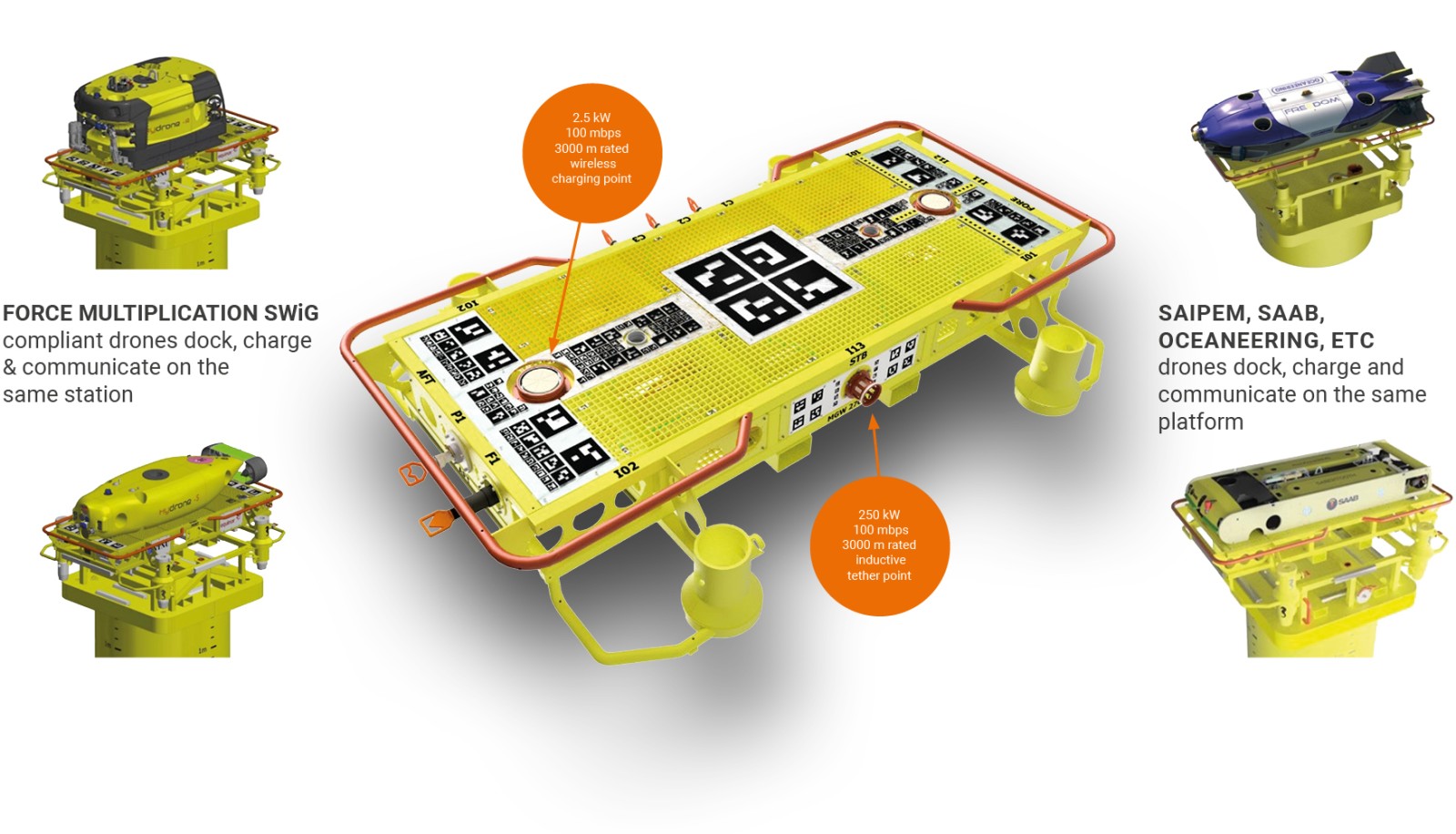
- High-power wireless charging – multiple 2.5 kW inductive couplers in the docking module recharge the drone’s batteries through seawater with no exposed metal contacts
- High-speed data link – the same platform provides high-bandwidth communication to shore, enabling 24/7 remote operations
- Long-life subsea infrastructure – the docking station and control module are designed for decades on the seabed, with inductive couplers qualified for long-term subsea exposure and thousands of mating cycles
During testing and operations, Hydrone-R has completed hundreds of fully subsea mate and disconnect cycles on our inductive plates, logged thousands of charging hours and transferred large volumes of mission data—demonstrating that wireless power and data are mature for continuous resident operations.
Open, interoperable by design
The Njord docking station is part of an open standardisation effort driven together with partners and operators. The mechanical design of the SDS and the inductive interface follows Subsea Wireless Group (SWiG) principles, enabling different vehicle types to use the same subsea “fuel station” much like cars share a topside gas station.
By decoupling the docking station from any single vehicle supplier and basing it on open interfaces, field owners can build drone fleets and move vehicles between fields while reusing the same charging infrastructure.
Operational Scaling: Deployment Plans
Impact: from records to routine operations
The results from Njord show what is possible when resident drones and wireless subsea infrastructure come together:
- Fewer vessel days – long-term residency and remote control reduce the need for traditional IMR vessels and associated emissions
- Always-ready intervention capability – the drone can be launched from the seabed within minutes when an inspection or intervention task appears.
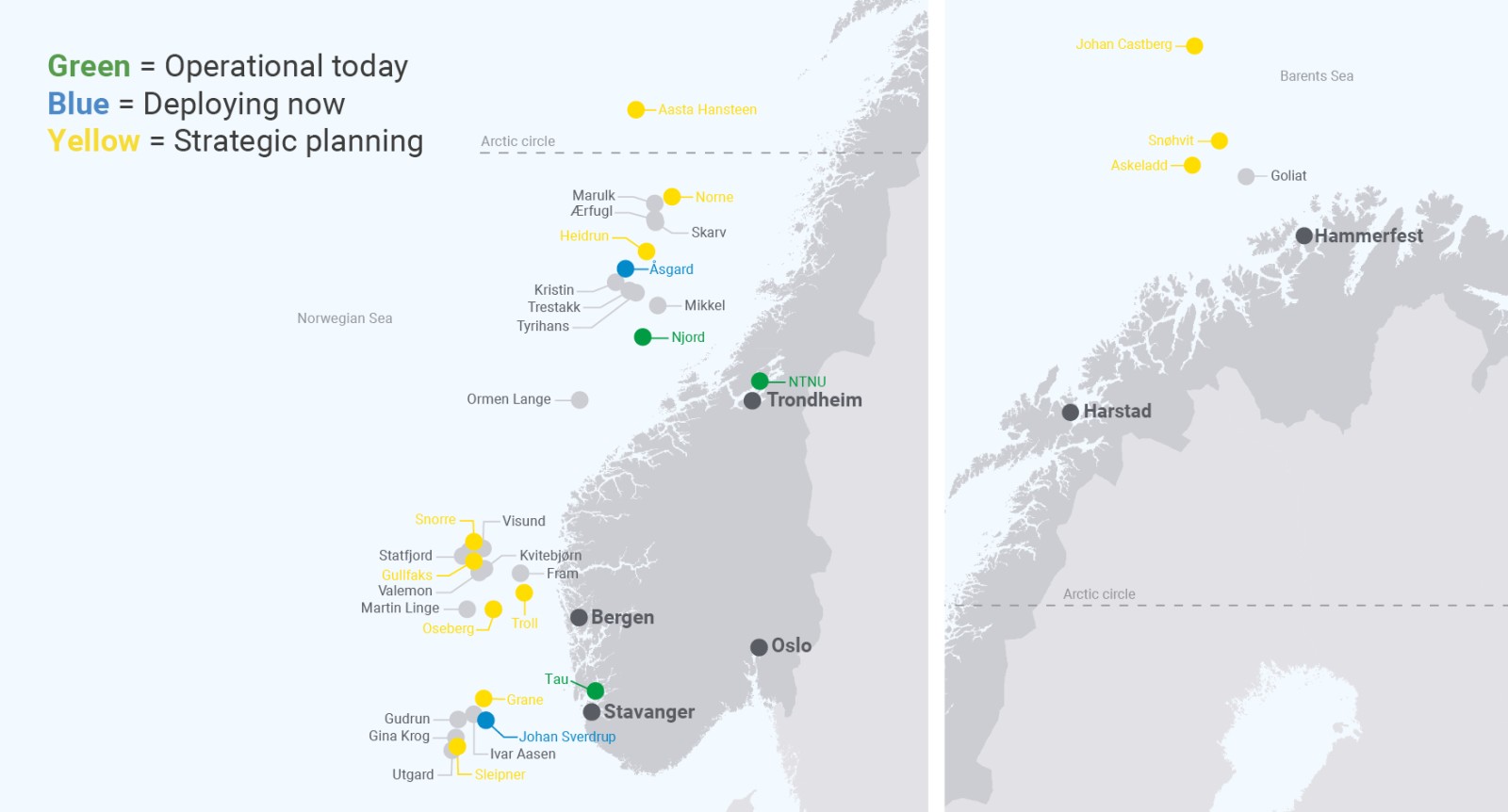
- Scalable concept – the same SDS building blocks are now being deployed and planned at multiple Norwegian fields, making it one of the most widely adopted subsea docking solutions
Unplugged – staying connected subsea
At Unplugged we are proud that our wireless charging and communication system is integrated into Blue Logic’s docking stations and Saipem’s Hydrone robotics platform, and that together they sit at the heart of Equinor’s resident drone programme at Njord.
The world-record residency is not just a milestone for the drone – it is proof that subsea wireless power and data are ready to support autonomous operations at scale. And this is only the beginning. As new resident drones and subsea applications emerge, our mission remains the same:
- Keep subsea assets connected
- Keep subsea drones working
- Make resident operations the new normal