Close Front page

A USV-Towed Submerged Docking Station for AUV Recharge and Rapid Data Offload

Underwater Refuelling-in-Motion

Courtesy of uSEA

No connectors. No surface recovery. Just continuous operation.

AUV missions have been limited by the same constraint: sooner or later, they must surface. Surfacing exposes the vehicle, delays the mission, and requires a costly support vessel — and clam waters. 

Unplugged, together with partners in the ACCESS AUV program (Usea, Blue Logic, Eiva, NTNU), has demonstrated a system  that removes this limitation:

→A fully submerged, USV-towed docking station that allows AUVs to recharge and offload data while the system is in motion.

This concept is the subsea equivalent of aerial refuelling — and it has now been proven at sea.
The Idea: A Moving Subsea Docking Station

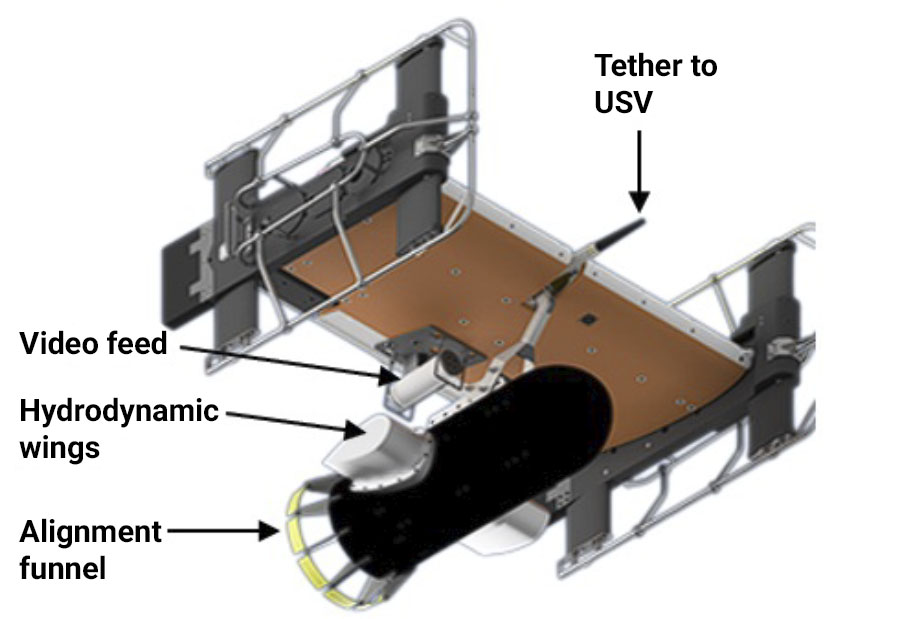
Inspired by hydrodynamic tow bodies, the docking station (or “towhead”) is deployed 10–50 m below the surface, where waves cannot destabilize it. A USV or vessel tows it steadily while the AUV approaches from behind.

The system allows the AUV to:

  • dock underwater
  • latch mechanically
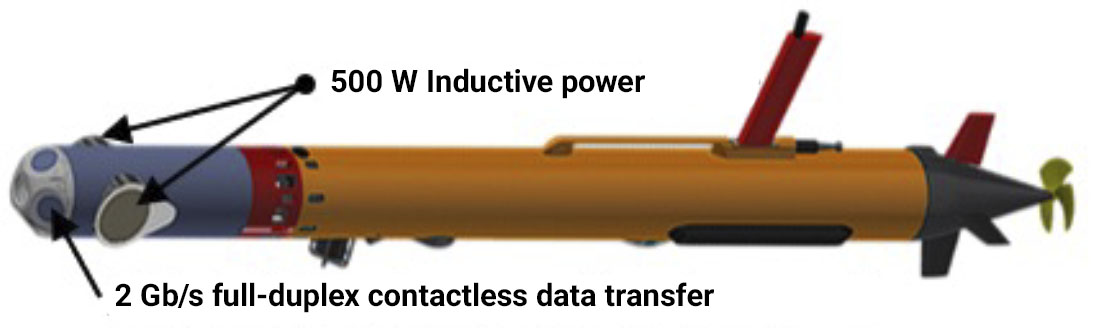
  • receive 500 W of wireless inductive charging
  • transfer 2 Gb/s full duplex of mission data
  • remain submerged and undetected

All without changing the AUV’s main control logic.

How Docking Works: Three-Stage Sensor Fusion

Docking takes place using a layered approach, transitioning between sensors as distance closes:

  • Long Range: USBL acoustic positioning provides bearing and range.
  • Mid Range: The AUV detects the towhead using forward-looking sonar.
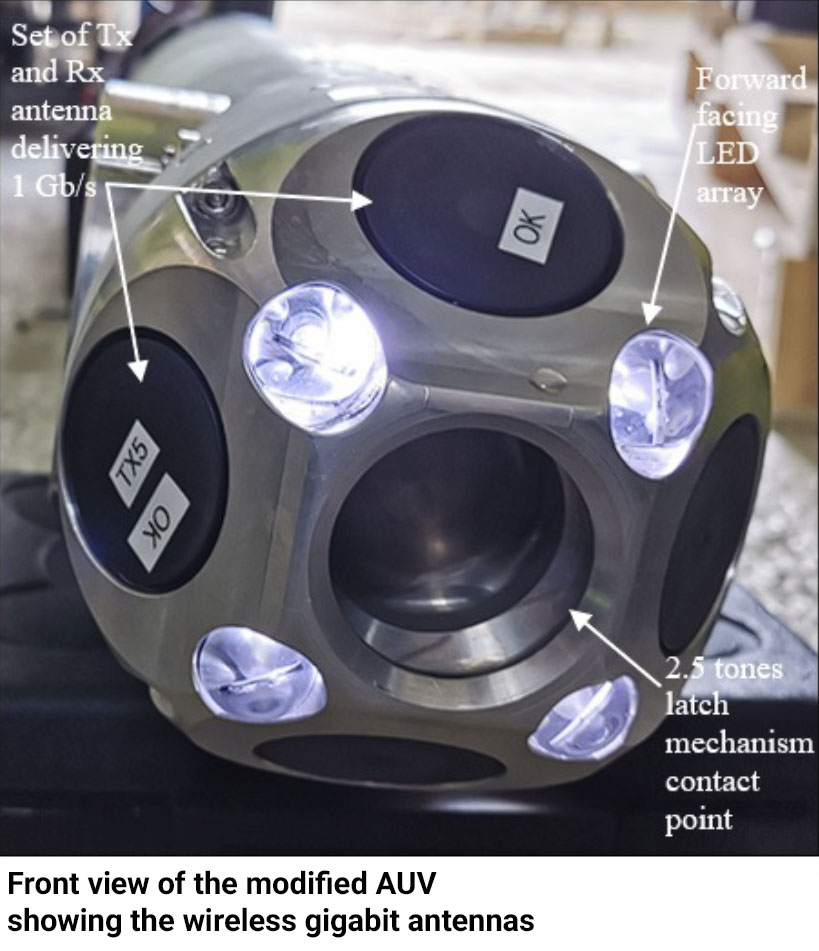
  • Final Metres: A towhead-mounted camera locks onto LED markers on the AUV nose for precise alignment.

This fusion ensures a robust approach even in reduced visibility or sediment-rich water.

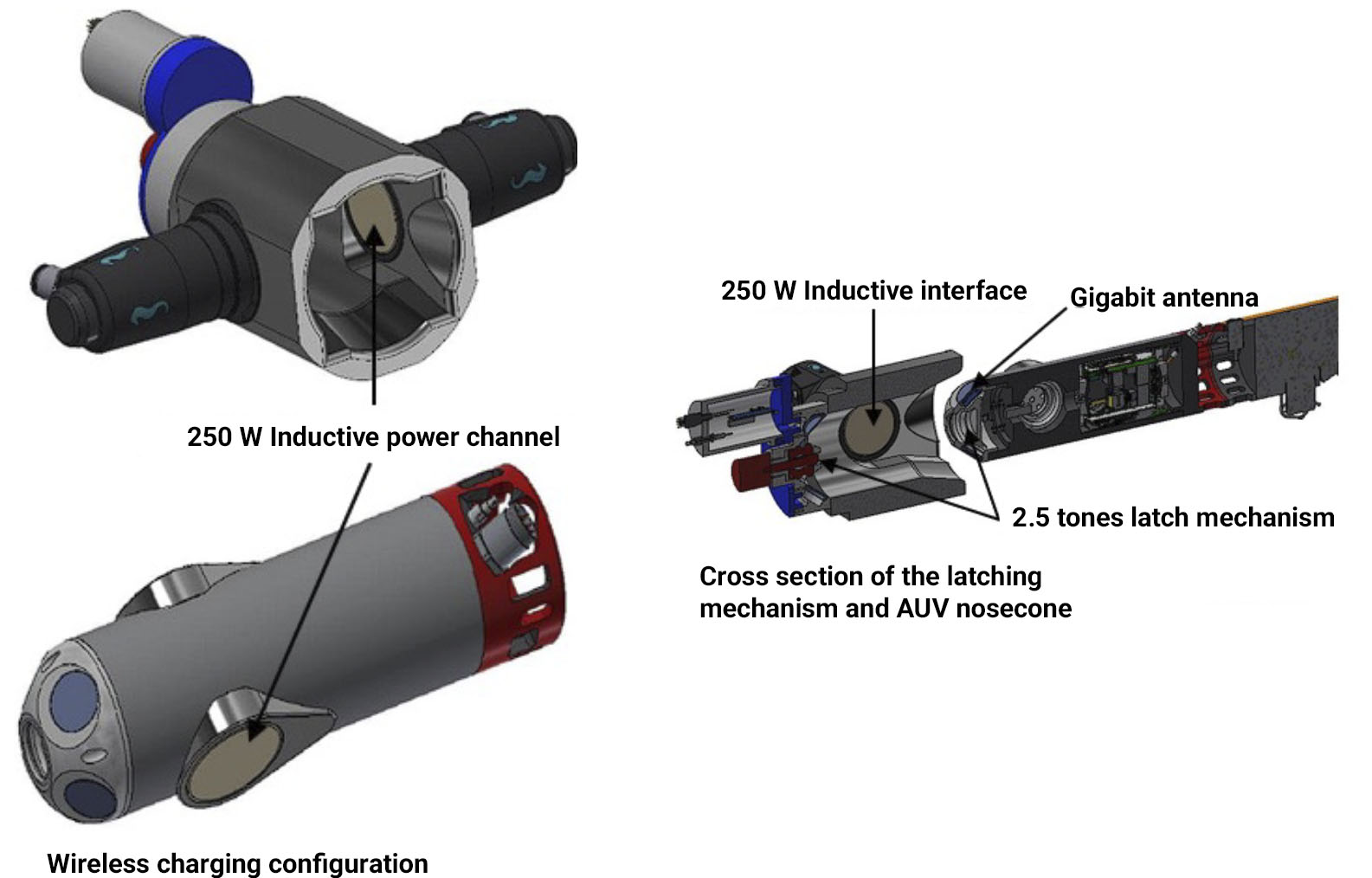
A tapered alignment funnel then captures the AUV and guides it into the 2.5-tonne mechanical latching system, engineered to accommodate misalignment while protecting the vehicle.

Courtesy of USEA Ocean Data and EIVA


Wireless Power: 500 W Inductive Charging Underwater

Once latched, two inductive interfaces — each delivering 250 W — provide 500 W of safe, pinless charging across a 1 cm gap.

Key capabilities demonstrated:

  • Accepts ±4 mm axial, ±7.5 mm lateral, and ±5° angular offsets
  • Immune to biofouling, contamination, and contact wear
  • Depth-rated to >1000 m

Modified AUV equipped with an integrated wireless doking interface composed of two inductive coils of 250 W each, delivering 500 W, two set og Tx and Rx gigabit antennas delivering 1 Gbps each.

2 Gb/S Full Duplex Inductive Data Transfer

Unplugged’s inductive antennas delivered:

  • 1 Gb/s per channel, full duplex
  • 2 Gb/s aggregate throughput
  • Sub-0.1 s link establishment
  • 100 GB offload in <7 minutes

This allows mission data, video, and telemetry to be offloaded without surfacing — and without modifying the AUV’s network architecture.

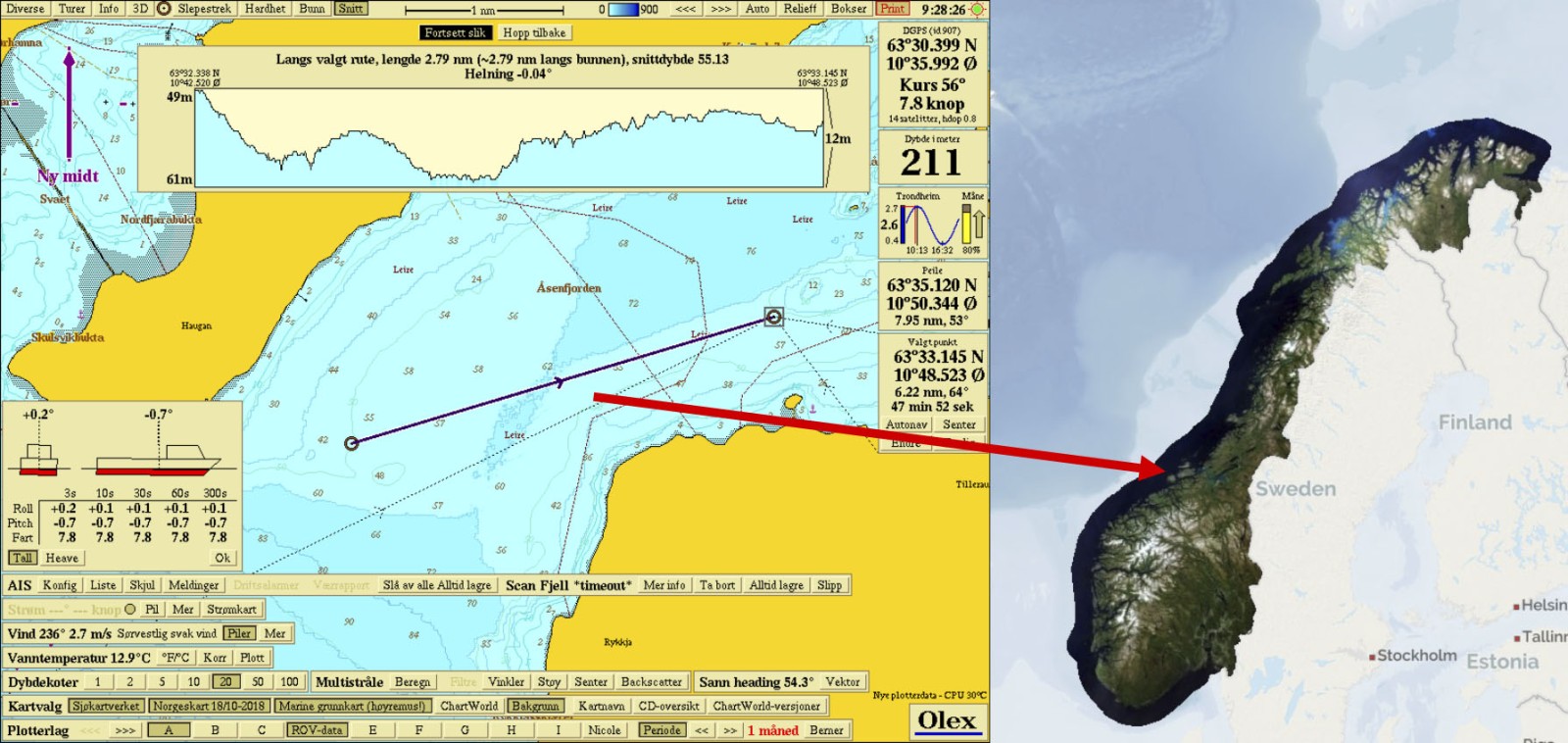
Results: Sea Trials in Åsenfjorden

Why this matters

This system enables capabilities that were previously impossible:

  • AUVs remain submerged for the entire mission
  • No deck handling, no weather window limitations
  • Reduced signature and increased survivability
  • Mobile logistics: the docking station cannot be pre-targeted
  • Support for multi-vehicle AUV swarms
  • Interoperability through standardised nose-interfaces

It marks the beginning of persistent underwater autonomy — where subsea vehicles operate for weeks or months without human recovery.

What comes next on our roadmap?

  • 25 kW inductive power transfer for XLAUV-class vehicles
  • 10 Gb/s wireless subsea data
  • Multi-AUV servicing from a single towhead
  • Standardisation of docking interfaces across OEMs

This will form the backbone of a fleet-ready, subsea logistics network supporting defence, offshore energy, and long-endurance ocean robotics.

Dr. Thomas J.J. Meyer
COO
+47 4644 2695
tjjm@unplugged.no